When people think about getting a home loan, the conversation often starts with one question:
“What’s the interest rate?”
It’s an important question — but after almost 20 years in mortgage broking, I can confidently say it’s rarely the only question we should be asking.
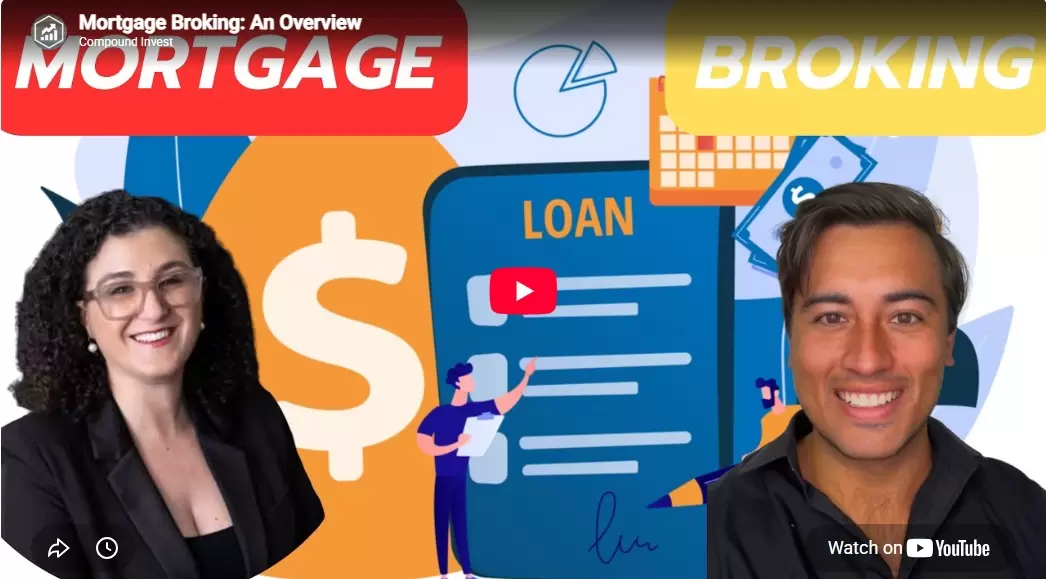
I recently sat down with Sam James from Compound Invest for a wide-ranging conversation about how property finance really works, how lending has changed, and why having the right strategy can be just as important as getting a competitive rate.
What does a good mortgage broker actually do?
There’s a perception that a mortgage broker’s job is simply to compare banks, find a cheap rate and submit an application.
The real work often starts well before that.
For me, it’s about understanding what you’re trying to achieve now, where you want to go next, and making sure the lender and loan structure support that bigger picture.
That becomes particularly important for property investors, because different lenders can assess exactly the same borrower very differently.
Your borrowing capacity isn't one number
One of the biggest topics we unpack in the video is borrowing capacity.
HECS or HELP debt, Afterpay and Zip accounts, credit-card limits, salary-sacrificed cars, missed repayments and multiple credit enquiries can all potentially affect how much you can borrow.
Lender policy matters too.
A major bank may assess your existing debts, rental income or expenses differently to another bank or non-bank lender. So being told by one lender that you can’t borrow enough doesn’t necessarily mean the conversation is over.
Sometimes the question is not simply “How much can I borrow?” but “Which lender fits my circumstances and my longer-term strategy?”
Rate matters — but rate isn't the strategy
Of course I want my clients to have a competitive interest rate.
But choosing a loan purely because it has the lowest advertised rate can sometimes work against what you're trying to achieve.
We talk about interest rates versus comparison rates, lender serviceability policies and why an investor building a portfolio may need a very different lending strategy to someone buying their first home.
We also discuss professional LMI waivers, which may allow eligible doctors, lawyers, nurses, midwives, bank employees and other professionals to borrow at higher loan-to-value ratios without paying Lenders Mortgage Insurance. The policies vary significantly between lenders, which is why knowing the detail matters.
“I've been told I can't borrow any more”
This is a conversation I regularly have with property investors.
You might already own two, three or more properties and have been told by your bank that you've reached your borrowing limit.
Sometimes you genuinely have.
But sometimes you've simply reached the limit of that particular lender's policy.
That’s when we need to look at the whole picture — your existing loans, equity, income, property portfolio and future goals — and work alongside your accountant or financial adviser where appropriate to understand what options may still be available.
It all comes back to strategy
We cover a lot more in the full conversation — including equity, valuations, deposits, LMI, cross-collateralisation, family guarantees and what really happens behind the scenes to get a property transaction through to settlement.
But the common thread is simple:
The right home loan isn't just about getting approved today. It's about making a decision that supports where you want to be tomorrow.
That’s what I believe good mortgage broking should be about.
If you're planning your next property move and would like some clarity around your borrowing capacity and options, get in touch with My Mortgage Concierge.
Or watch my full conversation with Sam James from Compound Invest below.